Else Lasker-Schüler to Marianne von Werefkin 1913
Soon, you'll be able to listen to the free audio tour here via our MuWi app.
Enjoy!
„Der Blaue Reiter“ (The Blue Rider) was a collective of artists who made transformative contributions to painting, graphic art, literature, and music. With its two exhibitions organized in 1911 and 1912 and the almanac published in 1912, it stands for subjectivity in art, the liberation of color from the object, and the idea of equality between artistic forms of expression from different eras, genres, and regions. It is thus part of the international avant-garde movements before the First World War.
Else Lasker-Schüler to Marianne von Werefkin 1913
This letter from Else Lasker-Schüler to Marianne von Werefkin, dated 1913, highlights two things that were important to the artists: First, the irregular, gender-fluid language deliberately subverts and challenges gender-specific role stereotypes — one of the themes that the artists explicitly brought to „Der Blaue Reiter“. Second, by using the multifaceted term “Blauer Reiterreiterin, ” Lasker-Schüler sought to highlight that Werefkin, as a “pioneer, ” had provided decisive impetus for the renewal of art at the beginning of the 20th century. Despite these women’s awareness that they had been an essential part of the “Blue Rider, ” the female artists were almost completely pushed out of the spotlight due to a male-centered art historical narrative.
After World War II, the first retrospective on the “Blue Rider, ” held in 1949 at the Haus der Kunst in Munich, cemented the group’s future male-dominated canon — a situation that persisted well into the 21st century. For here, all the artists of the circle—Wassily Kandinsky, Franz Marc, Paul Klee, Alexej von Jawlensky, and many others — were celebrated on a grand scale, while of the female artists, only Erma Bossi, Gabriele Münter, and Marianne von Werefkin remained and were featured to a much lesser extent. Many of the female artists who were previously represented have been the subject of monographic solo exhibitions of varying scope in recent decades, but whenever “Der Blaue Reiter” as a whole was the focus of an exhibition, their art was largely excluded once again, thereby marginalizing their contributions.
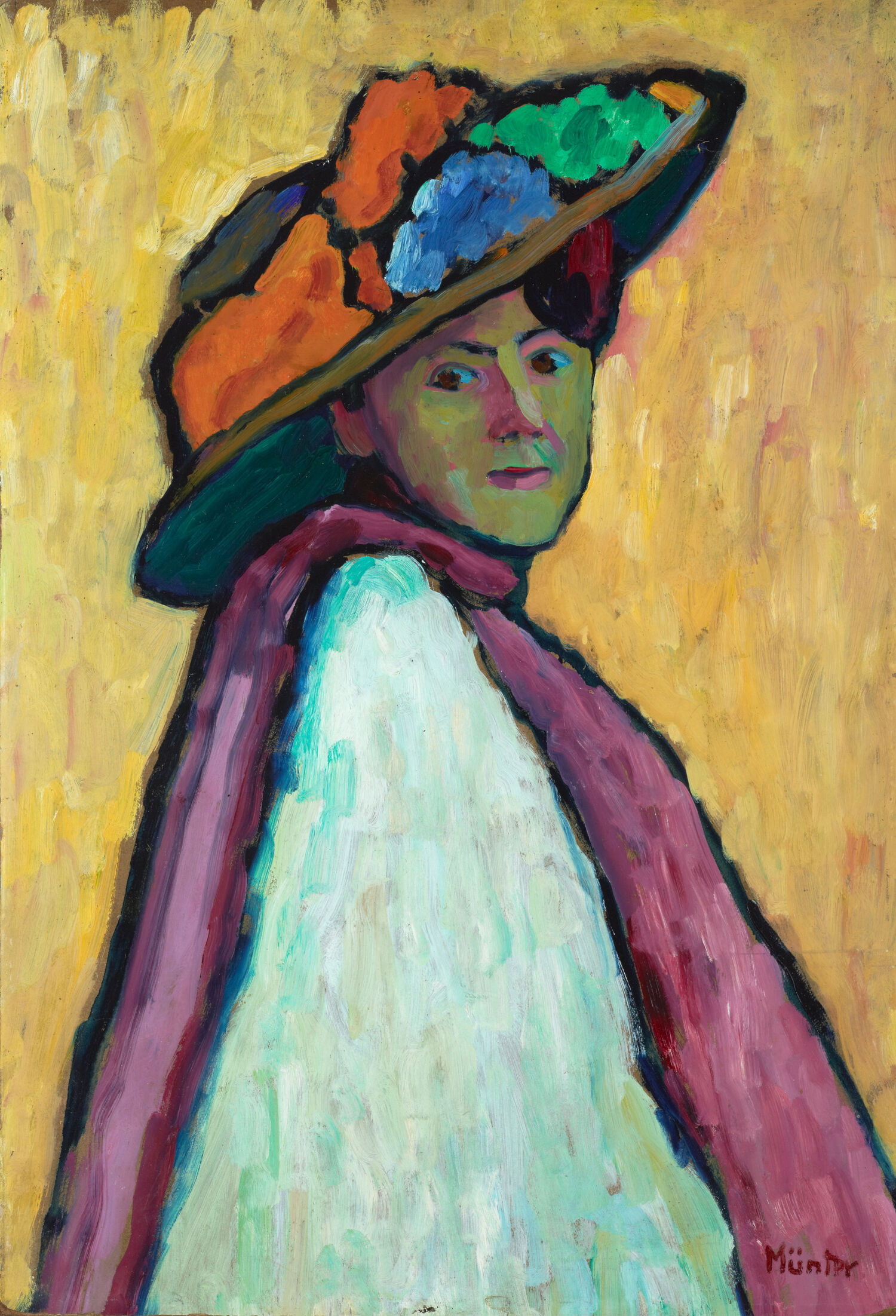
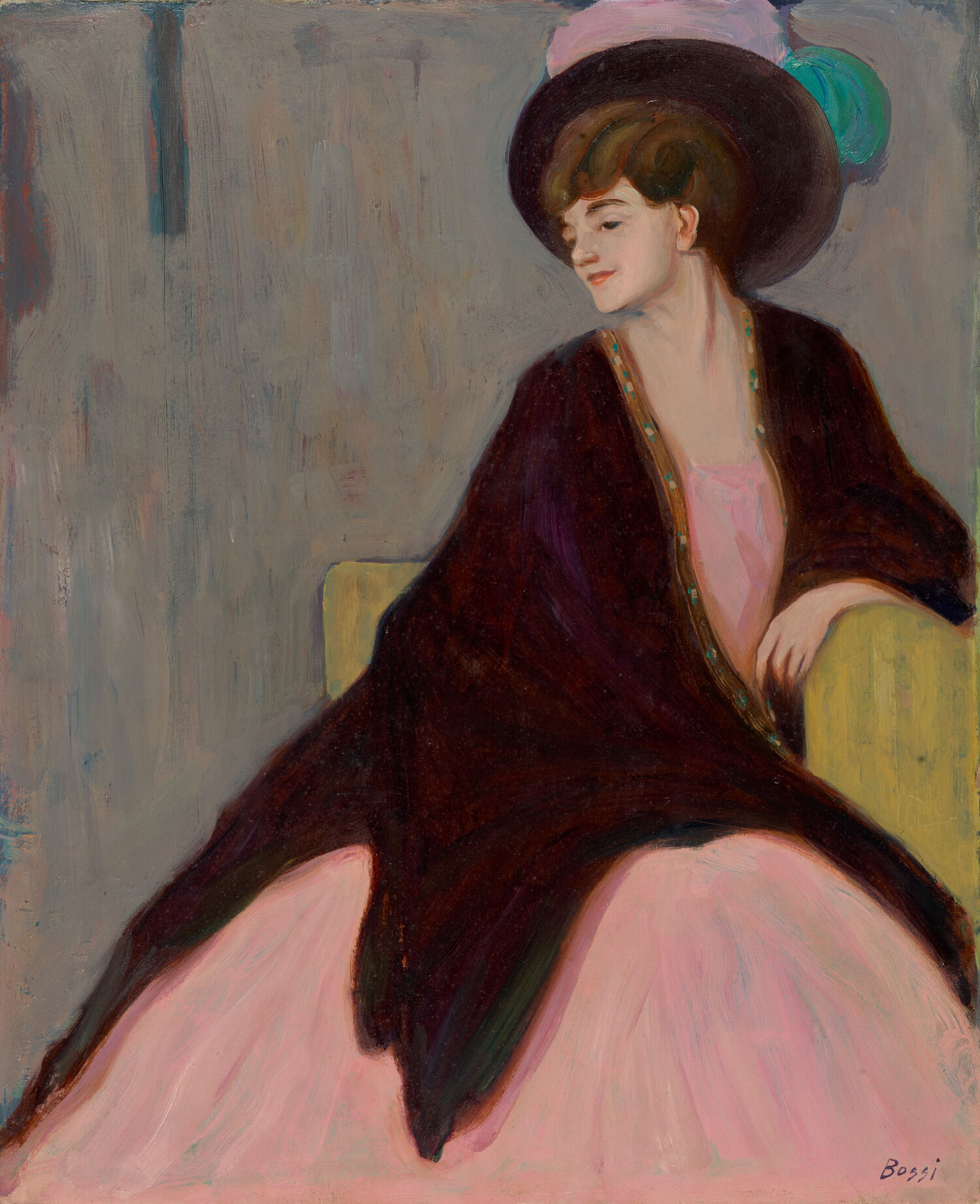
The exhibition “Women Artists of the Blue Rider” brings together the eight female artists who were represented in one of the three exhibitions of the “New Artists’ Association of Munich” (1909/1910/1911) or in one of the two exhibitions of the “Blue Rider” (1911/1912): The “inner circle” included Maria Franck-Marc, Gabriele Münter, and Marianne von Werefkin. In addition, the artists Erma Bossi, Emmi Dresler, Elisabeth Epstein, Natalya Goncharova, and Carla Pohle also exhibited works in these exhibitions. Elisabeth Erdmann-Macke, Else Lasker-Schüler, Sonia Delaunay-Terk, and Olga Meerson were very close to the “Blue Rider” circle and were therefore included.
It is not until the focus narrows to these twelve female artists that it becomes clear how much, in hindsight, was unknowingly distorted or simply omitted and therefore remained unexamined. It was not only the men who maintained artistic connections with France or Russia, but also, to a significant extent, the female artists. Furthermore, they enriched the “Blue Rider” with themes that are highly relevant today: For their paintings sometimes hint at strategies for how underrepresented women can hold their own in a competitive environment. They also offer an ironic perspective on “women’s art”—which was generally devalued—and, through their socially and culturally critical works, open our eyes to constructed role models, questions of identity, and gender roles—aspects that held less interest for the men in the group. Not least because of their art—which took women’s perspectives into account—“Der Blaue Reiter” was a unique phenomenon among the countless artistic circles of its time. With the “Women Artists of the Blue Rider, ” the “Blue Rider” gained in plurality, polyphony, and diversity.
An exhibition in cooperation with the Paula Modersohn-Becker Museum in Bremen and the Städtischen Galerie im Lenbachhaus and Kunstbau Munich and the Fondazione Marianne Werefkin in Ascona, Switzerland.
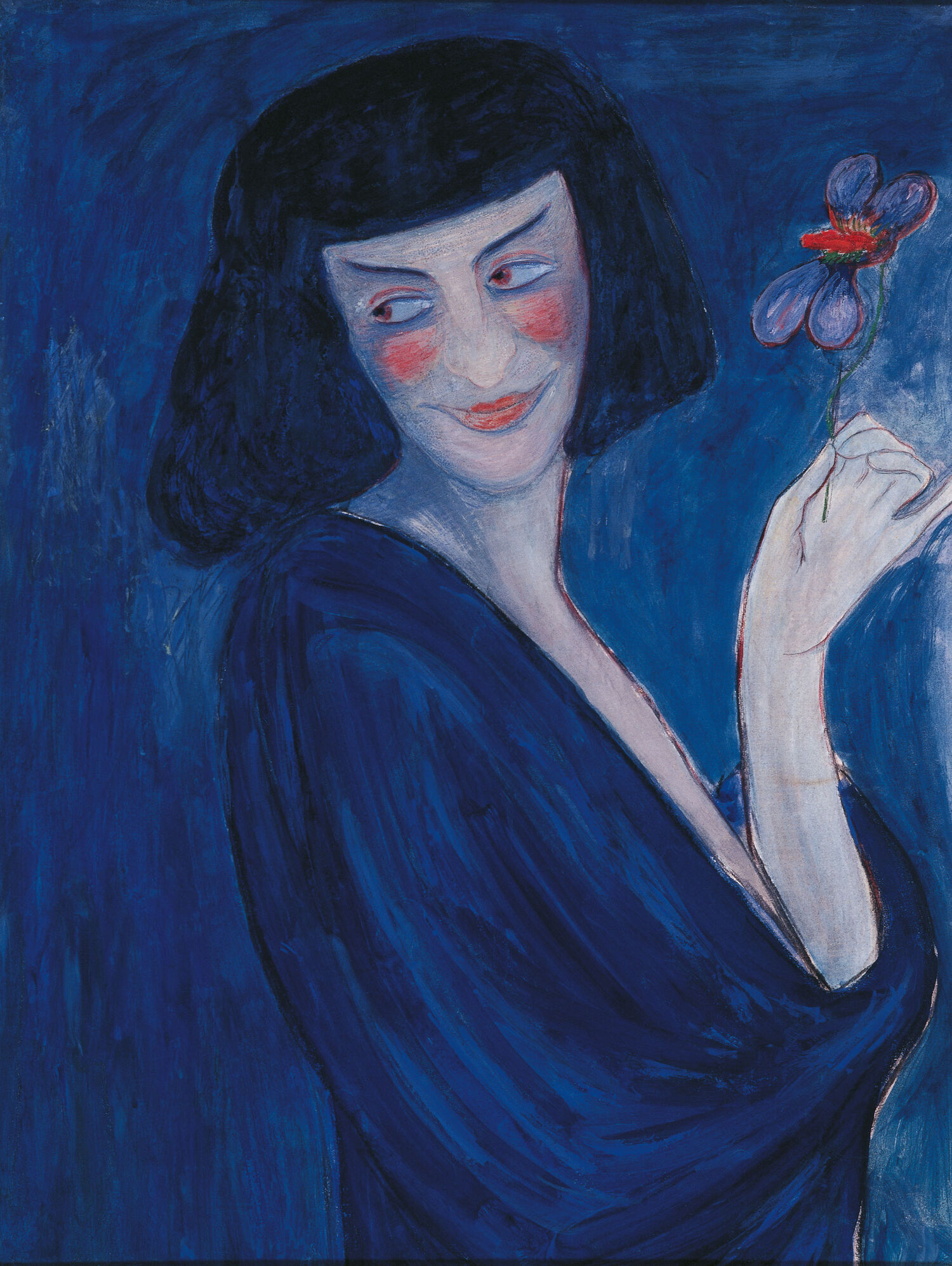
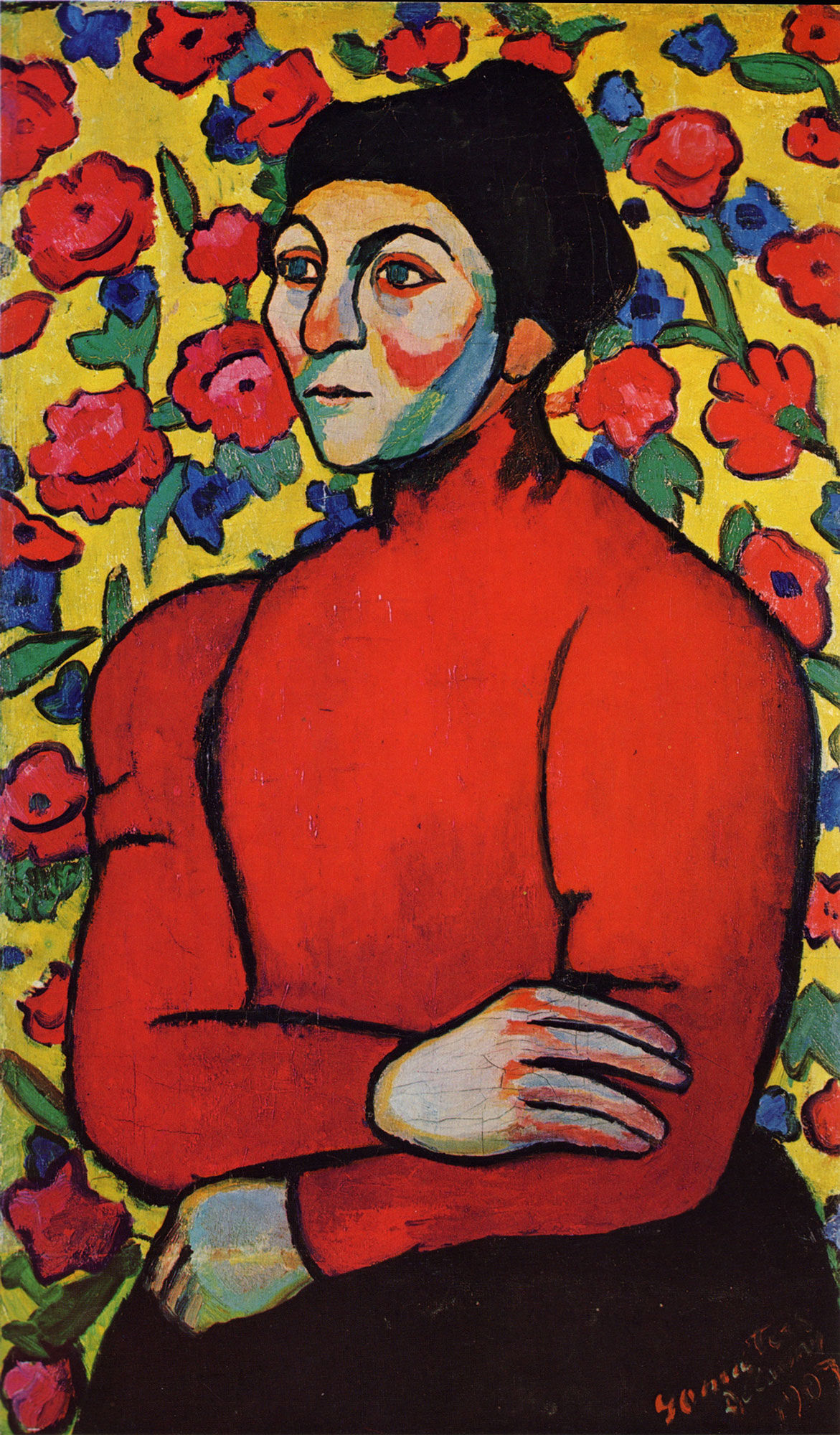
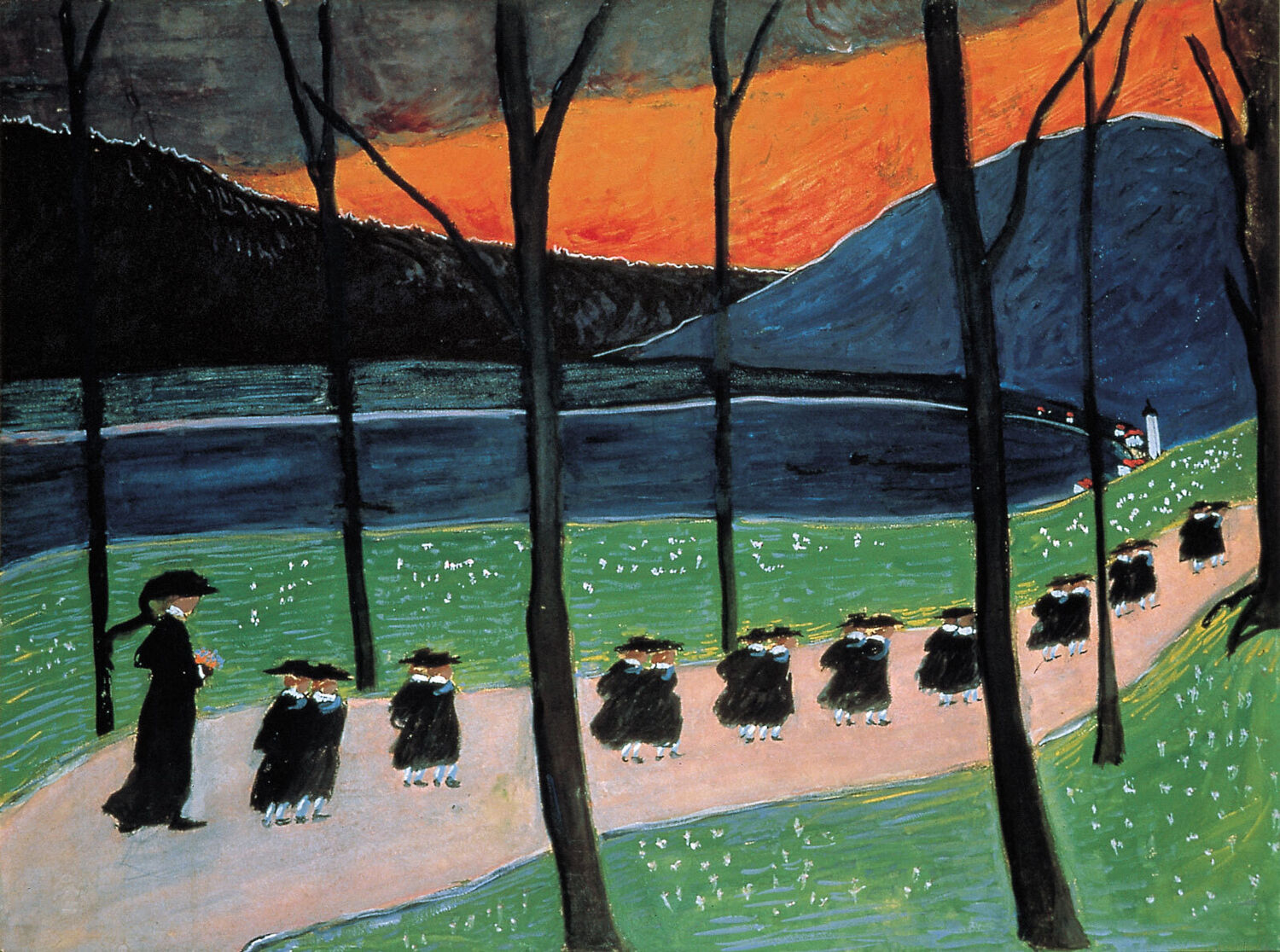
1 Marianne von Werefkin, The Dancer Alexander Zakharov, 1909. Museo Comunale d’Arte Moderna, Ascona. Photo: Museo Comunale d’Arte Moderna, Ascona
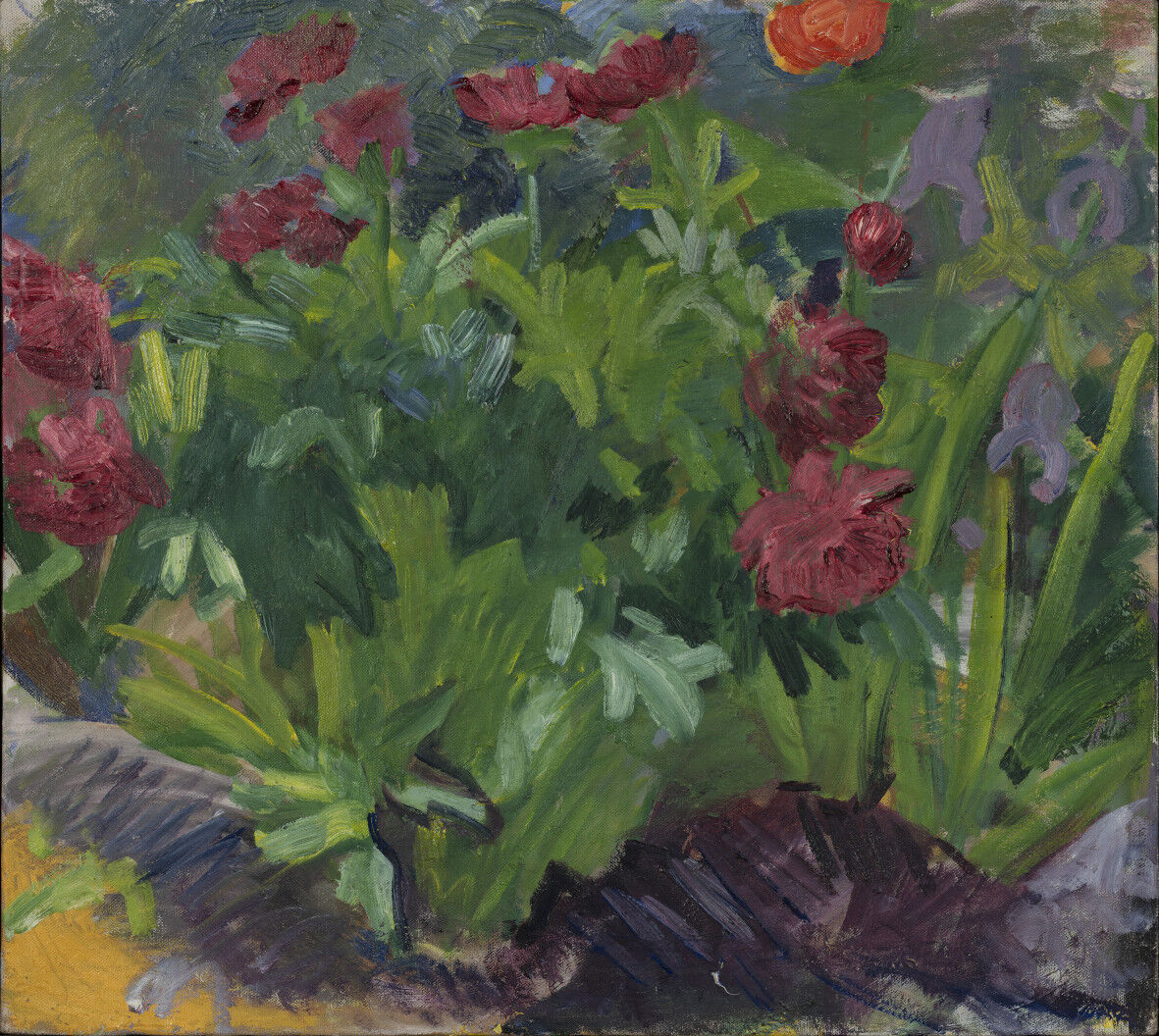
2 Maria Franck-Marc, Peonies, 1909. Museum Wiesbaden. Photo: Museum Wiesbaden / Bernd Fickert
3 Elisabeth Epstein, Self-Portrait, 1911, Städtische Galerie im Lenbachhaus und Kunstbau, Munich, in memory of Jerome Pustilnik, New York City
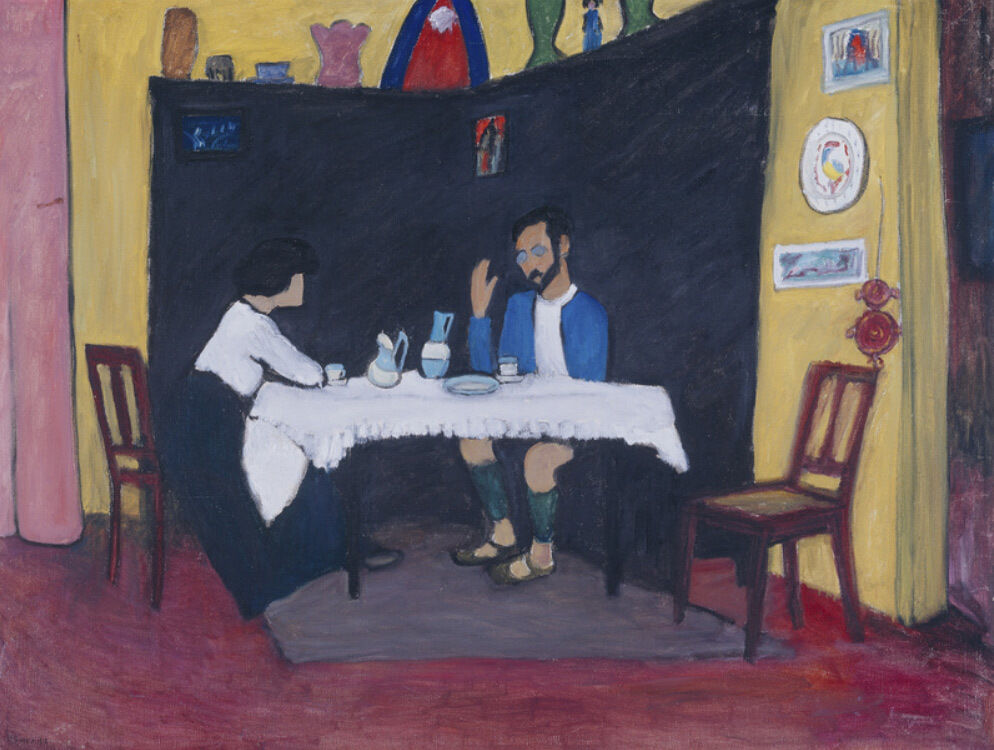
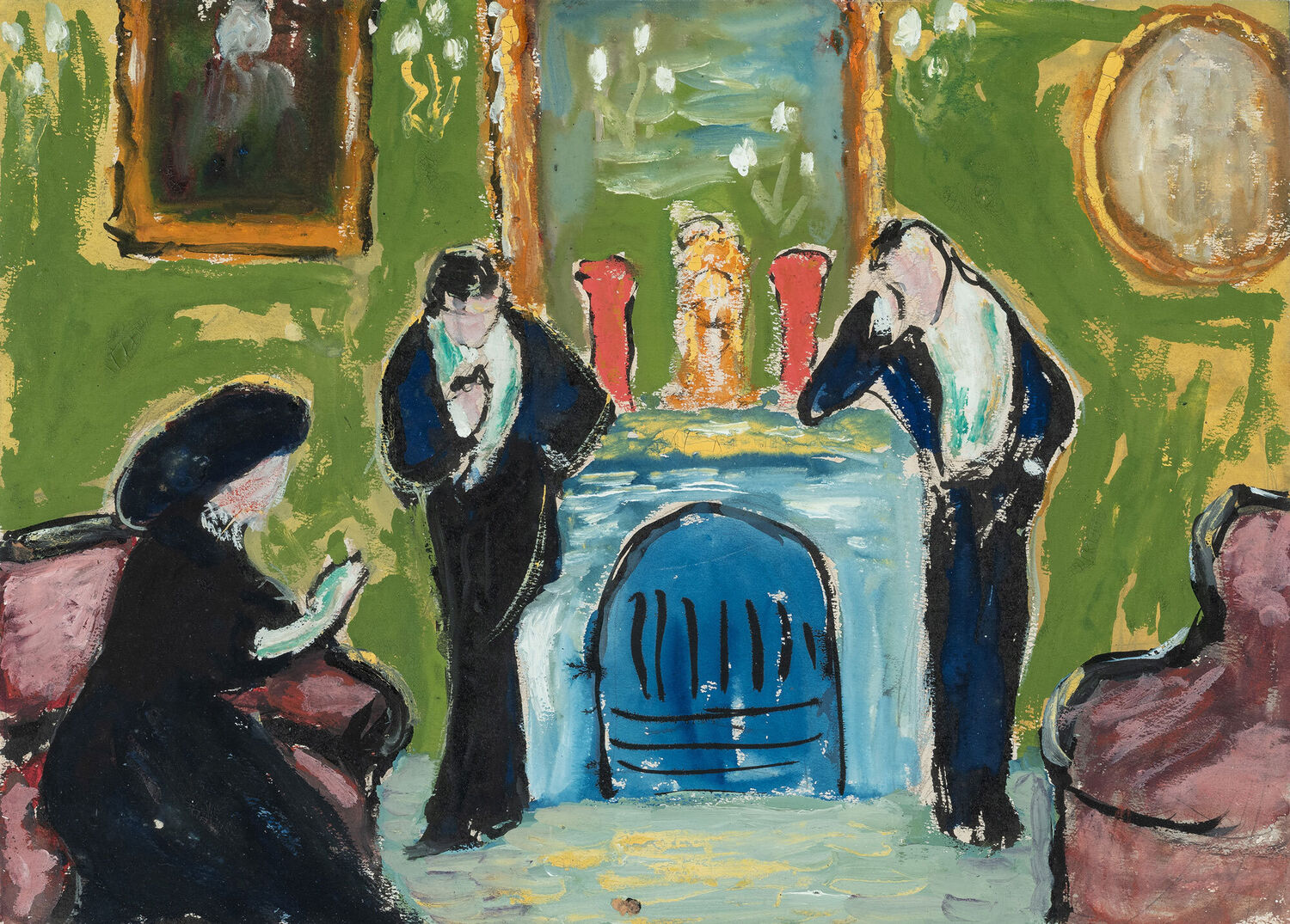
4 Gabriele Münter, Kandinsky, and Erma Bossi at the
Table, 1912, Städtische Galerie im Lenbachhaus und Kunstbau, Munich, Gabriele Münter Foundation 1957 © VG Bild-Kunst Bonn 2026
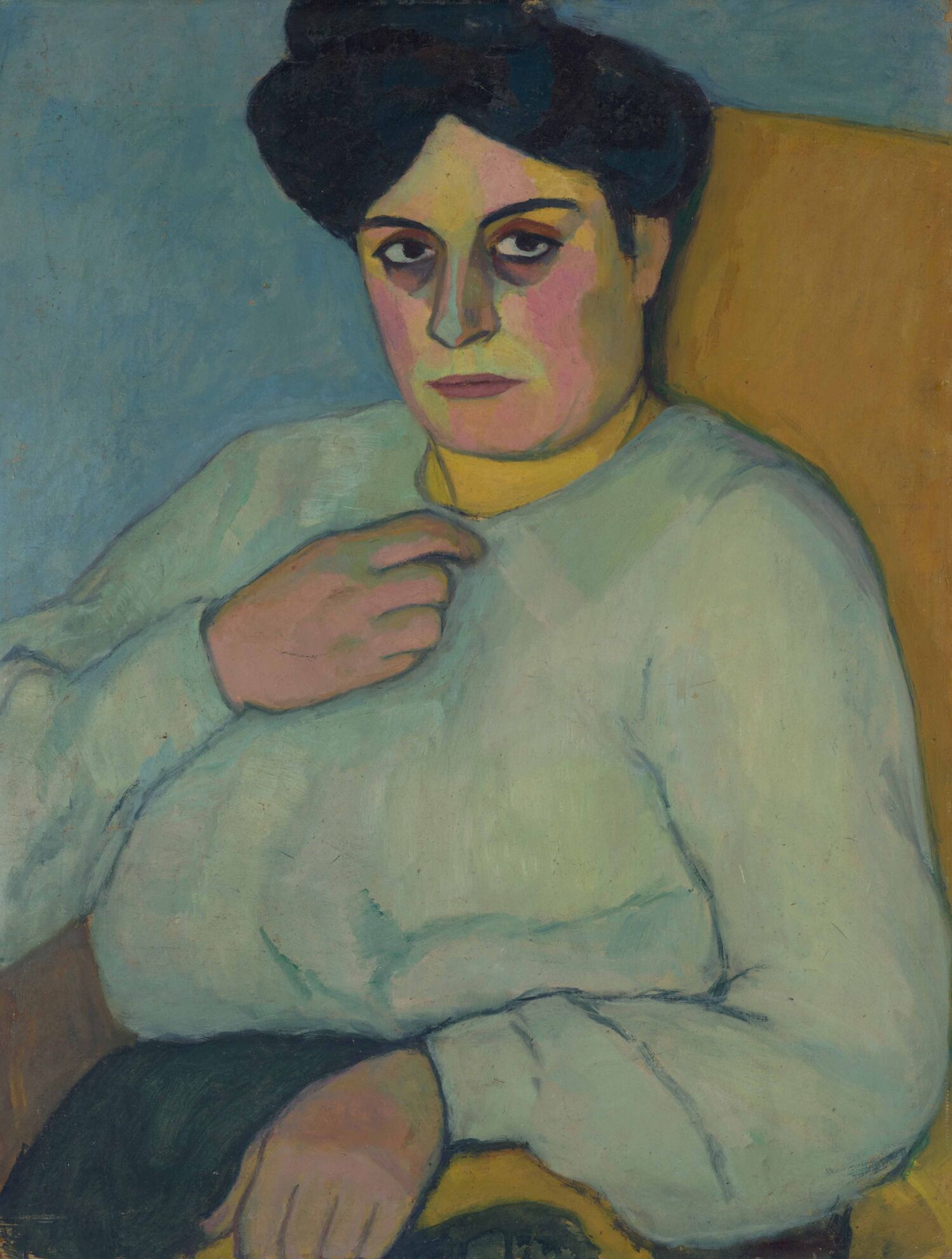
5 Sonia Delaunay, Philomena, 1907. Credit: Centre Pompidou, Mnam/Cci, Paris, © and Photo: Pracusa S.A. 20260417
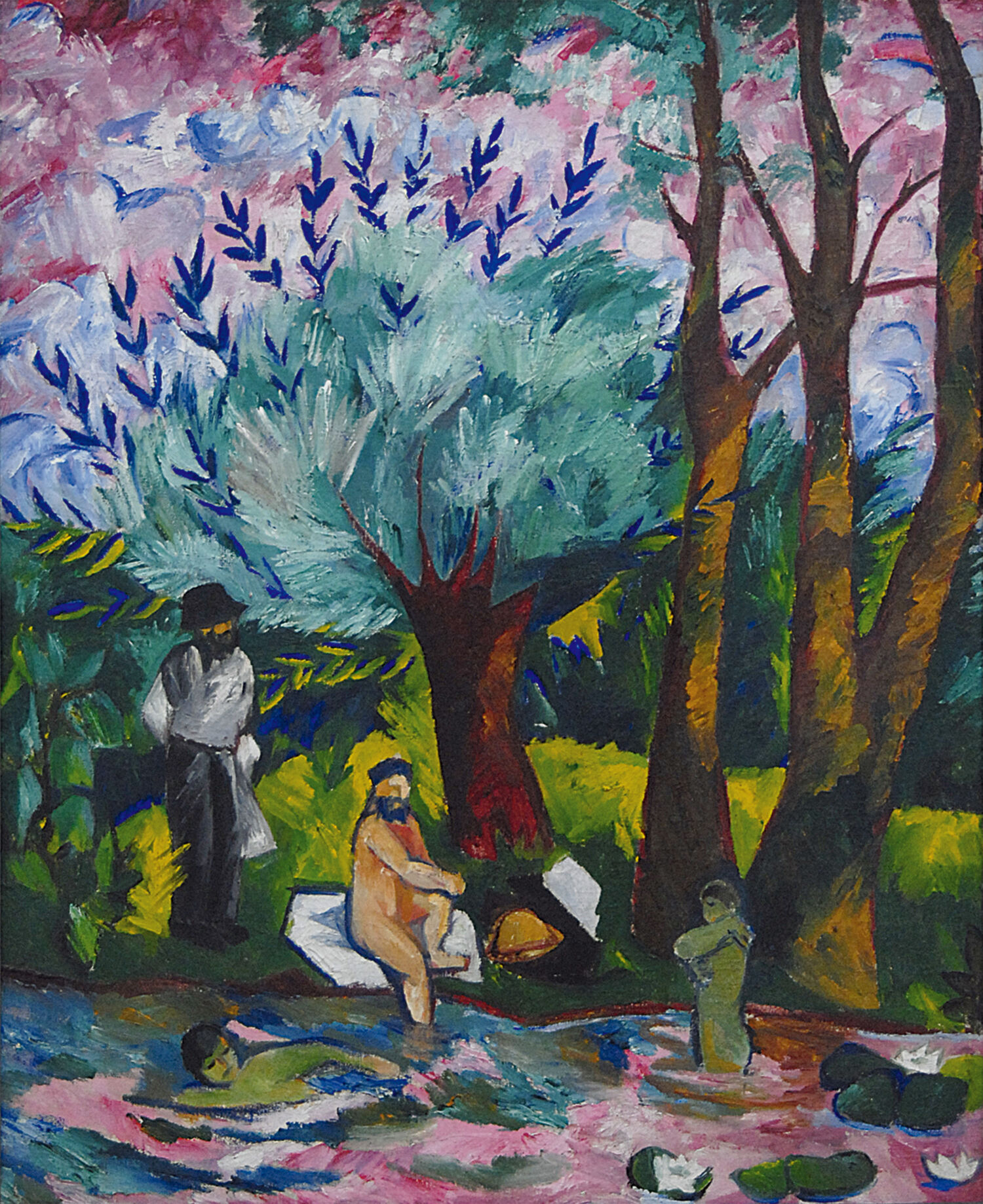
6 Natalia Goncharova, The Bathers, ca. 1910, Museum
Wiesbaden, acquired with the support of the Hessian Cultural Foundation, the Association for the Promotion of the Fine Arts in Wiesbaden, and
the City of Wiesbaden
Follow the artists of the exhibition on their journeys: our web app maps the movements and encounters of the Women Artists of the Blue Rider over time.
#01 Women in Dialogue
Thu, Dec 3, 26, 7:00 p.m.
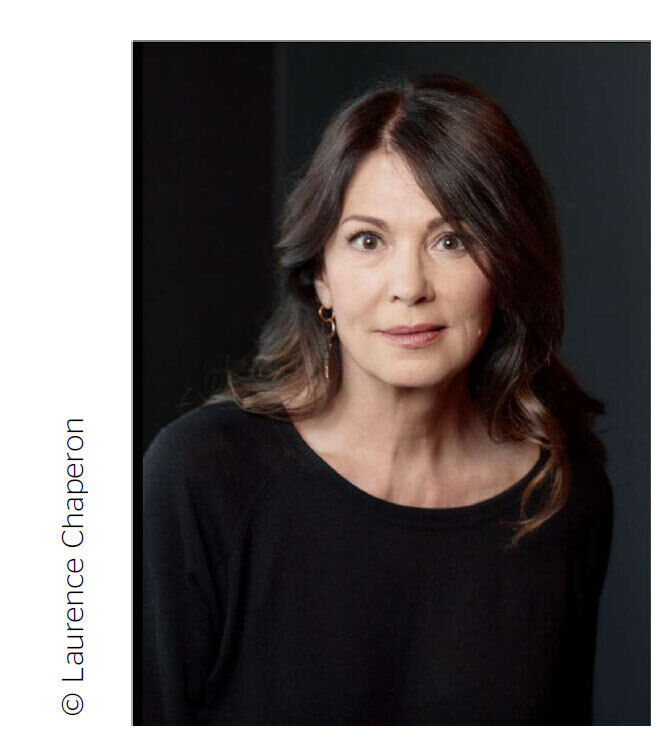
Conversation with Iris Berben (patron of the exhibition and actress)
Carina Lerch (Chief Detective Director at the Southeast Hesse Police Headquarters)
Tijen Onaran (entrepreneur, investor, and author)
Moderator: Catherine Mundt (hr2kultur)
In cooperation with hr2kultur
#02 Women in Dialogue
Thu, Jan. 28, 27, 7:00 p.m.
Conversation with Dina Reit (CEO of SK Laser GmbH), T.B.A., and Susanne Wingertszahn (Chair of the DGB Rhineland-Palatinate/Saarland)
#03 Gabriele Münter Turns 150!
Thu, Feb 18, 27, 7:00 PM
Conversation with art historians and curators Dr. Henrike Hans (Bremen), Dr. Katharina Henkel (Hanover), and Dr. Annegret Hoberg (Munich) Moderator: Dr. Roman Zieglgänsberger
ARTIST TALK
Fri, Oct 23, 26, 12:00–12:30
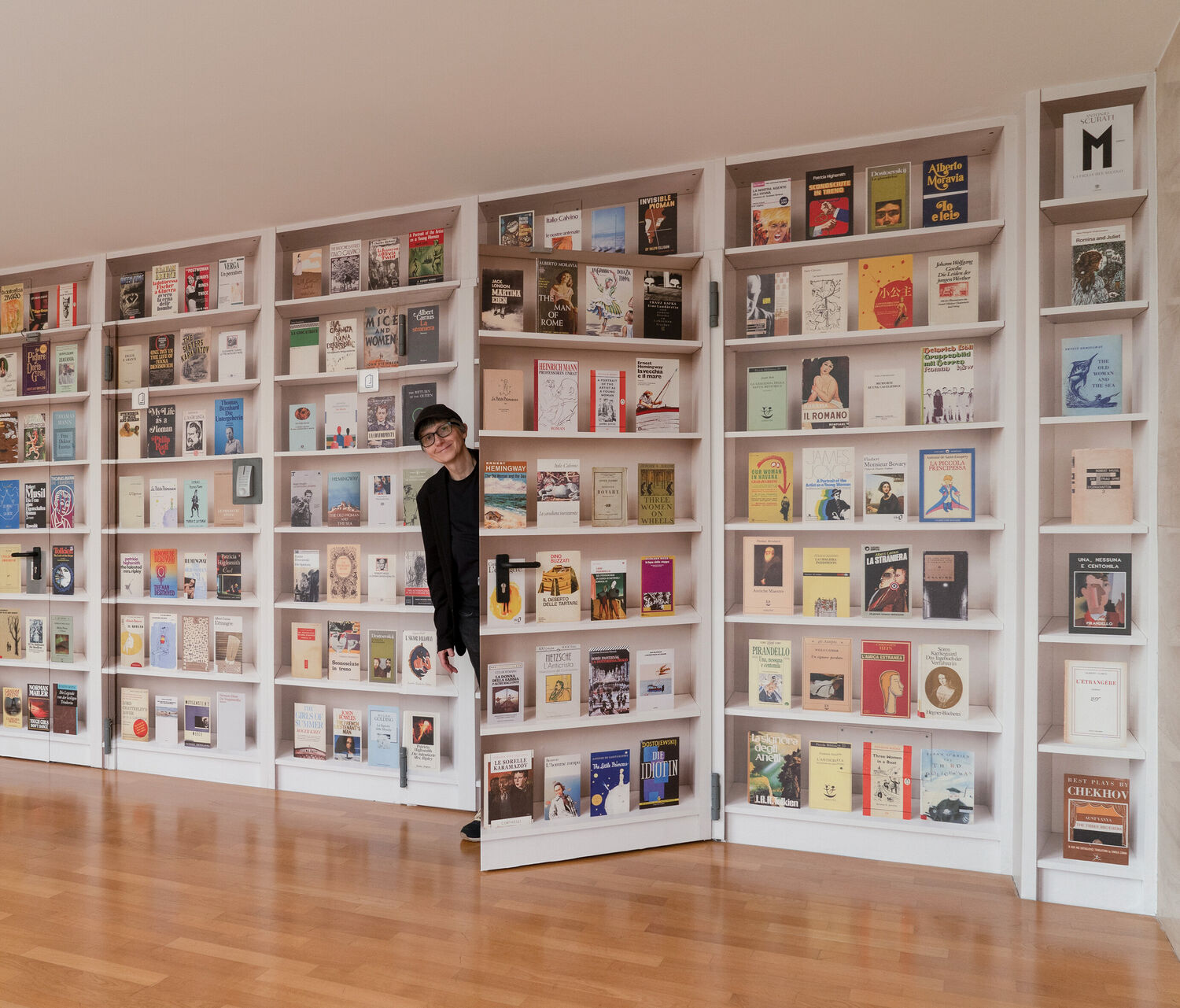
On the installation “Orlando’s Library” with artist Daniela Comani
and curatorial assistant Bettina Löwen
_____
LECTURE
Thu, Nov 19, 26, 7:00 p.m.
Maria Franck-Marc Turns 150!
With Jessica Keilholz-Busch, Director of the Franz Marc Museum, Kochel am See
_____
CURATOR-LED TOURS
Thu, Dec 10, 26, and Thu, Jan 14, 27, 6:00–7:00 p.m. each
Women Artists of the Blue Rider
With Dr. Roman Zieglgänsberger
_____
SPECIAL TOUR
Thu, Dec 17, 26, 7:00 PM—8:00 PM
Women in Focus
A dialogic tour with Ann-Katrin Spies and Bettina Löwen in cooperation with the Zonta Club Wiesbaden
SPECIAL GUIDED TOUR WITH CITY WALK
Pioneers: Women Who Made History
Sun, Nov. 22, 26, 12:30 p.m. (Duration: approx. 2.5 hours) City walk and exhibition visit In cooperation with the frauen museum wiesbaden, with Valentine Goldmann and Ann-Katrin Spieß
_____
FREE SATURDAY HANDS-ON ACTIVITY
Sat, Dec 5, 26, 11:00 a.m.—2:00 p.m.
Stitch by Stitch — Words of Empowerment
Hands-on activity: Collective embroidery
_____
ART AFTER WORK
Thu, Jan 21, 27, 7:00—8:30 p.m.
On the Question of Visibility: Historical and Contemporary Perspectives on Female Artistic Practice
With artist Johanna Reich and curatorial assistant Bettina Löwen
_____
READING — Literature Meets Visual Art
Sat, Feb 20, 27, 11:00 a.m.
Stories About the Images in the Exhibition
The “Writing Workshop” with Jutta Schubert in cooperation with VHS Mainz
_____
To accompany the exhibition, the Caligari Filmbühne, in cooperation with the museum, will present films about Marianne von Werefkin, Maria Franck-Marc, and Gabriele Münter.
MUSEUM WORKSHOP FOR CHILDREN
Sat, Nov. 14, 26, 10:15 a.m.—1:00 p.m.
When Colors Tell Stories
Sat, Dec. 12, 26, 10:15 a.m.—1:00 p.m.
Brave Women, Bold Colors
Sat, Feb. 13, 27, 10:15 a.m.—1:00 p.m.
Discovering the World Through the Eyes of the Blue Rider Women
_____
OPEN STUDIO FOR FAMILIES
Sun, Jan 17, 27, 2:30—4:30 PM
Female, Bold, Vibrant — Women Artists of the Blue Rider
Sun, Feb 21, 27, 2:30—4:30 PM
Studio Workshop on the Women Artists of the Blue Rider
Group visits are by appointment only, even for self-guided tours. Otherwise, admission cannot be guaranteed.
Due to very high demand, we can only offer self-guided adult groups a one-hour time slot from Tuesday through Friday between 12:00 p.m. and 2:00 p.m.
What do we discover when we view works of art from over a century ago through a contemporary feminist lens? Our exhibition’s leporello invites you to get to know the twelve female artists, their works, and their stories anew. It explores themes of visibility, self-determination, and questions that continue to concern us today.
You’ll be able to explore the leporello online here soon!
The contemporary artist Daniela Comani (Berlin) will present her intervention “Orlando’s Library” alongside the exhibition as part of the accompanying collection presentation, which further explores the exhibition’s central themes.
Artist Talk
Fri, Oct. 23, 2026, 12:00–12:30 p.m.
On the intervention “Orlando’s Library” with artist Daniela Comani and curatorial assistant Bettina Löwen
The “Augen zu” Art Podcast by ZEIT
July 1, 2026
[IN GERMAN]