7 Jun 26 — 10 Jan 27
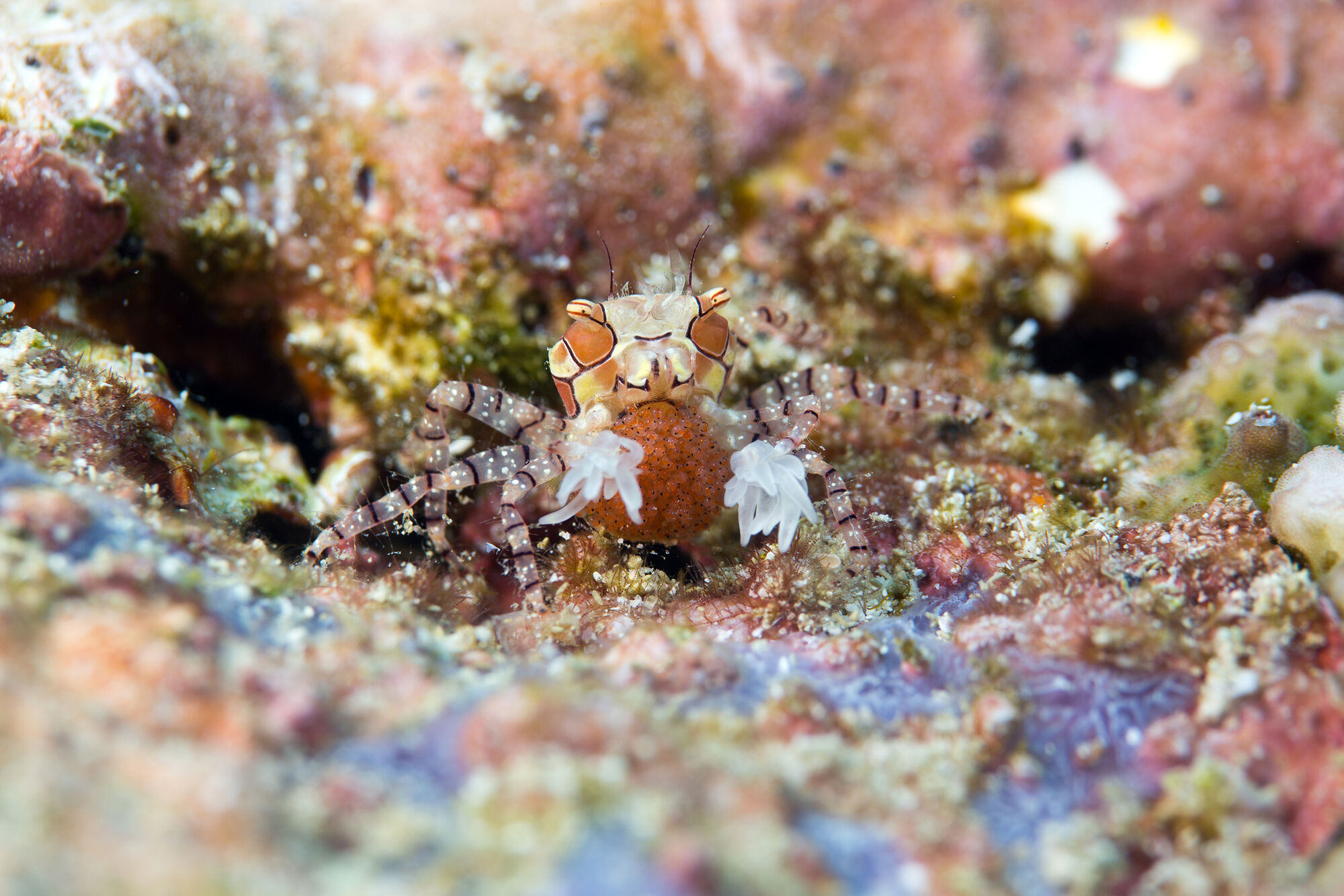
A female boxer crab armed with sea anemones carrying her delicate brood protectively under her body. Photo: prilfish, license: CC BY 2.0
Every living being begins life vulnerable. In oceans, forests, and deserts, parents face the same question: How much can they pass on to the next generation? Some species release their offspring into the world and never return. Others guard eggs, carry their young, build shelters, provide food, and teach skills. Still others fast, fight, or even give their lives for their offspring.
This process can involve mothers, fathers, helpers, and entire communities, whose efforts ensure the continuation of life. The biological foundations of care are deeply rooted in the animal kingdom and are similar across different species. The body chemistry and neural pathways that accompany bonding, motivation, and reward in us humans are also found in related forms in very different animal groups—even in birds, amphibians, and fish.
If the drive behind brood care is similar, could the experience of parenthood also share commonalities? With animals, we often speak of pure “instinct.” But perhaps animals also feel something that fulfills the same function in their world: closeness, motivation, and bonding.
We cannot know for certain what (other) animals feel. Their bodies, senses, and environments differ from our own. Yet when parents protect and care for their offspring, a question arises: Is caregiving purely instinctive behavior, and how does it differ from what humans call “parental love”?